Navigating Encryption Protocols in UK Mobile Gaming Apps for Enhanced Player Protection
Iris Schmidt · Aug 19, 2026
Navigating Encryption Protocols in UK Mobile Gaming Apps for Enhanced Player Protection
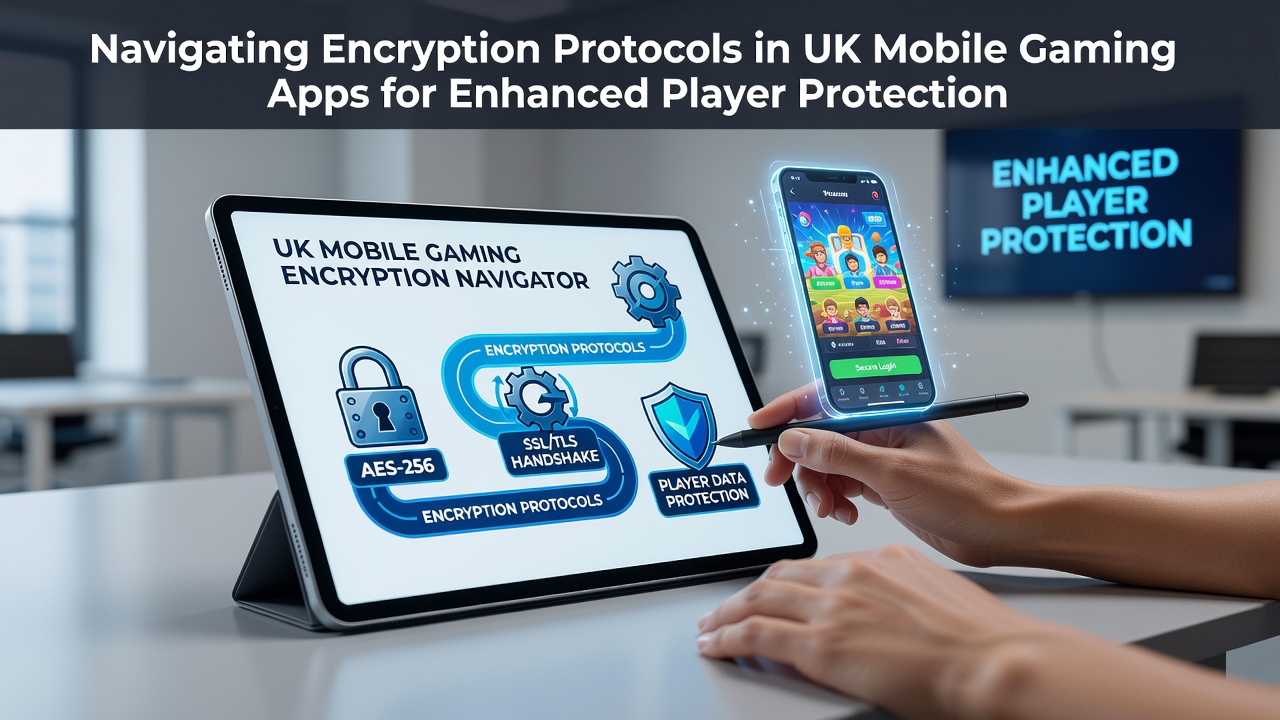
Mobile gaming apps in the UK transmit vast amounts of player data every day, including account details, payment information, and in-game progress, so developers rely on established encryption protocols to safeguard those exchanges. Research from the National Institute of Standards and Technology shows that AES-256 remains the standard for symmetric encryption in mobile environments, while TLS 1.3 handles the secure channel setup between devices and servers. These protocols work together to prevent interception during transmission, and developers integrate them at the application layer so that even if a network connection becomes compromised, the encrypted payload stays protected. Observers note that implementation begins with certificate pinning, where apps verify server identities against a predefined list rather than trusting the device’s default certificate store. This step reduces risks from man-in-the-middle attacks, and code reviews combined with automated scanning tools help confirm that no outdated cipher suites remain active. Data indicates that apps updated after 2024 typically disable TLS 1.2 fallback options, forcing connections to use the stronger 1.3 handshake that completes in fewer round trips and incorporates forward secrecy by default.Key Protocols in Current Use
Developers select protocols based on performance requirements and regulatory expectations across jurisdictions. TLS 1.3 provides authenticated encryption with associated data, combining confidentiality and integrity checks in a single operation, whereas AES-GCM or ChaCha20-Poly1305 serve as the underlying cipher suites depending on hardware acceleration availability. Researchers at European Union cybersecurity agencies have documented that ChaCha20 performs better on older ARM processors still common in some UK handsets, so many studios maintain dual cipher support to maintain consistent security without sacrificing speed.
Key exchange mechanisms have also shifted, and most current apps use elliptic curve Diffie-Hellman with X25519 curves because they offer smaller key sizes while maintaining equivalent strength to larger RSA keys. This choice reduces handshake latency, which matters in real-time multiplayer titles where even small delays affect gameplay. Studies from Canadian research institutions confirm that these curves resist known quantum threats better than legacy methods, giving developers a longer migration path toward post-quantum algorithms scheduled for broader testing in coming years.
Practical Steps for Implementation
Teams begin by mapping all data flows inside the app, identifying which endpoints handle sensitive material and which can operate with lighter protection. Once the map exists, they configure the networking library, whether OkHttp on Android or URLSession on iOS, to enforce minimum TLS versions and pinned certificates. Automated build pipelines then run unit tests that attempt to downgrade the connection or inject invalid certificates, flagging any failure before the build reaches testers.

Runtime monitoring adds another layer, with apps logging handshake failures and certificate mismatches to a secure analytics endpoint. Security teams review these logs weekly, correlating spikes with known vulnerability disclosures or regional network changes. In August 2026, several UK studios plan to publish aggregated statistics on handshake success rates, allowing the wider industry to benchmark performance against peers without exposing proprietary implementation details.
Player Data Categories and Protection Levels
Player identifiers such as usernames and device tokens receive baseline encryption during transit, while financial details and personally identifiable information trigger additional measures including tokenization at the payment processor level. Location data used for responsible gaming checks travels under the same TLS protection yet undergoes separate anonymization before storage. Reports from Australian academic centers indicate that combining encryption with data minimization reduces the volume of information exposed in any single breach, lowering potential impact on individual players.
Emerging Standards and Compatibility
Industry groups continue to evaluate hybrid post-quantum key exchanges that layer classical and quantum-resistant algorithms during the handshake. Early test deployments show acceptable overhead on flagship devices, yet older models require careful tuning to avoid battery drain. Observers expect broader guidance documents from multiple standards bodies by late 2026, giving developers clearer migration timelines that balance security gains against compatibility requirements across the UK’s diverse device ecosystem.
Conclusion
Encryption protocols in UK mobile gaming apps continue to evolve through incremental updates that prioritize both security strength and user experience. By anchoring implementations to recognized standards, maintaining rigorous testing pipelines, and monitoring real-world performance, developers sustain protection for player data across changing network conditions and device landscapes. Continued collaboration between technical teams and standards organizations supports steady progress without disrupting existing services.